STEM Learning
Engaging in science, technology, engineering, and math education.
About
STEM — an acronym for Science, Technology, Engineering, and Mathematics — represents more than a collection of academic disciplines. It now forms the foundation for a vast spectrum of knowledge and skills that drive innovation, creativity, and progress in today’s world. As the landscape of the global economy shifts, a strong grounding in STEM has become not only essential for those pursuing scientific or engineering paths, but increasingly critical for accessing high-demand post-secondary programs across an array of fields, as well as for securing entry into some of today’s highest-paying professions.
Where once the relevance of STEM learning was largely confined to careers in science, technology, and engineering, it now extends far beyond, shaping the very fabric of modern business and influencing the evolution of the cultural arts. Industries such as finance, marketing, entrepreneurship, digital media, and design are impacted by rapid technological advances and data-driven decision-making, all of which require a solid understanding of STEM principles. Even the creative industries — visual arts, music, and performance — are increasingly intertwined with digital technology, coding, and mathematical concepts, making STEM literacy vital for creative practitioners intent on pushing boundaries and seizing new opportunities.
To access many of these high-demand post-secondary programs and lucrative careers, students must acquire a foundational understanding of STEM disciplines while in high school. This rigorous preparation opens doors to fields once considered unrelated to science and math, reflecting how deeply STEM skills have permeated the modern professional world.
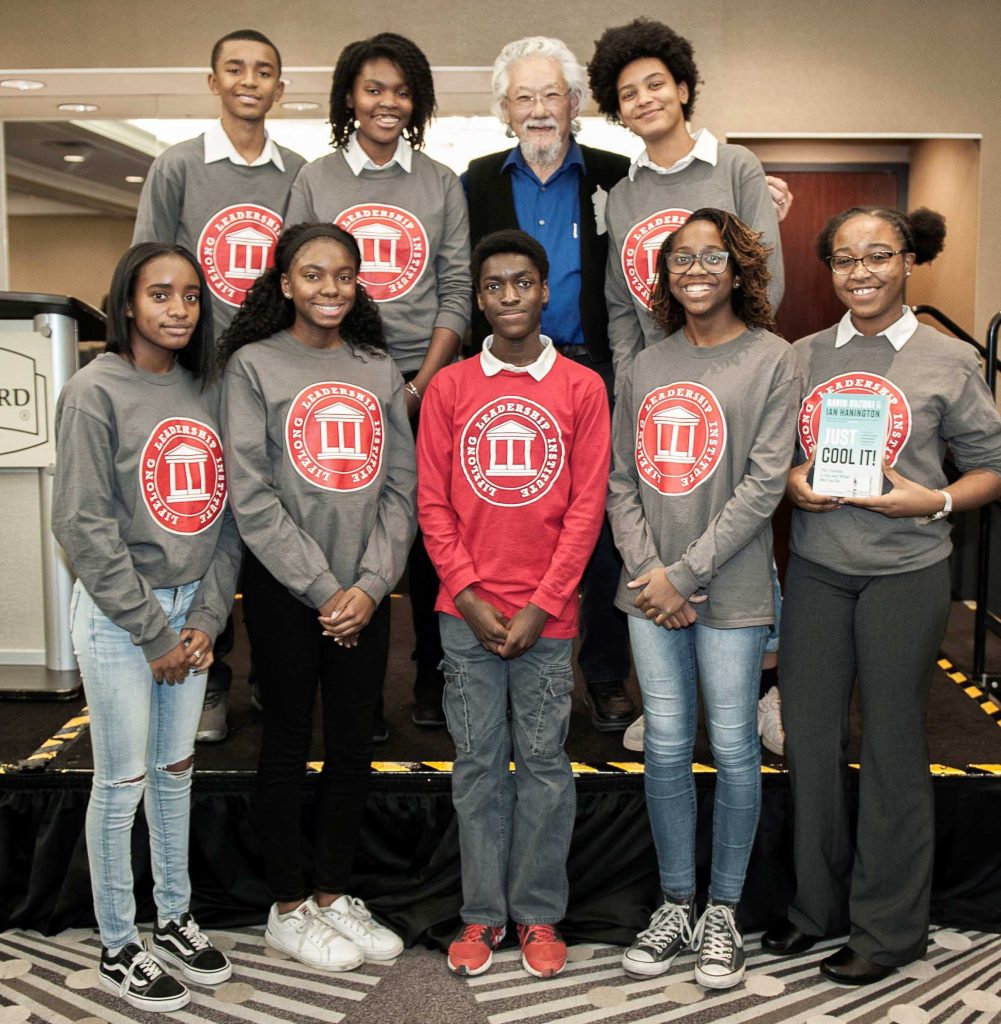
However, significant disparities persist in who has access to these opportunities. Black youth remain markedly underrepresented in STEM-focused studies, which serve as gateways to post-secondary STEM education and careers.
This underrepresentation is underscored by research, including a 2017 report from Dr. Carl James at York University, Toronto, which found that just 53% of Black students in the Toronto District School Board were enrolled in academic courses leading to STEM pathways, compared to 81% of white students.
Similarly, a 2020 survey by Dr. Kevin Hewitt of Dalhousie University, Halifax, revealed that only 1% of physicists aged 18–34 in Canada identified as Black, a stark contrast to the 6% share of Black Canadians in that age group.
These studies highlight the urgent need to address barriers to STEM engagement and to actively support the participation of underrepresented groups. Empowering all students with strong STEM foundations is no longer an option but a necessity — for ensuring equitable access to education, unlocking future careers, and fostering innovation in every corner of society, from boardrooms to creative studios and beyond. The LBD program is ‘all in’ on STEM learning and, working with universities and other partners, provides an array of opportunities for students to reinforce their foundation in STEM preparation.
Some LBD STEM-learning strategies are described below.
Pursue STEM
Pursue STEM is a science and mathematics enrichment initiative designed for Leadership by Design (LBD) students in Grades 10, 11, and 12. The program features a range of science activities and experiments led by faculty and students from the University of Toronto. It is funded and delivered by the Department of Physics, Faculty of Arts and Science, University of Toronto, and administered by Professor Emeritus David Bailey.
In the 2024-25 academic year, approximately 50 Grade 10 LBD students opted to start Pursue STEM, completing ten in-person, laboratory-focused STEM workshops held on Saturdays at the St. George Campus of the University of Toronto. A combined 53 Grades 11 and 12 students opted to continue studies in Pursue STEM.
The Grade 10 curriculum included topics such as earth sciences, statistics, Arduino and computer science, physics, cell and systems biology (CSB), mathematics, environmental science, chemistry, and astronomy. Outlined below are four examples of Saturday Pursue STEM sessions conducted at the University of Toronto:
Physics Workshop (Grade 10)
- Venue: University of Toronto, St. George Campus
Section 1
Research Talk: How to measure what the atmosphere is made of from challenging locations
Section 1
Research Talk: How to measure what the atmosphere is made of from challenging locations
Description: Professor Kaley Walker will present an overview of her research involving spectroscopy for atmospheric measurements. She will describe her group’s activities at a polar research laboratory in the high Arctic, 1100 km from the North Pole, as well as in Northern Ontario, where instruments are flown to altitudes of up to 35 km using large balloons. Additionally, she will outline her work on the Canadian Atmospheric Chemistry Experiment (ACE) satellite mission, which measures atmospheric gases from space.
Section 2
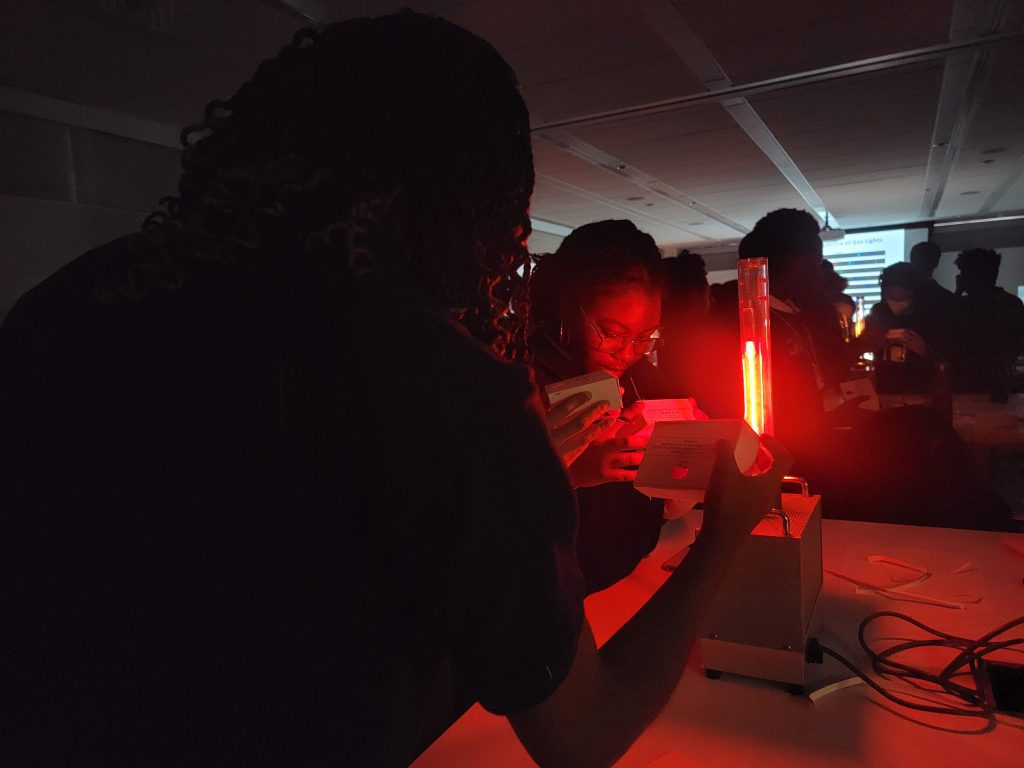
Workshop: A hands-on experiment on spectroscopy: Building your own spectroscopes
Section 2
Workshop: A hands-on experiment on spectroscopy: Building your own spectroscopes
Description: This hands-on workshop provides an introduction to the electromagnetic spectrum and fundamental concepts of spectroscopy. Participants will construct a spectroscope and examine various light sources. The session will demonstrate how these techniques are utilised in laboratory and field instrumentation. Additionally, attendees will gain insight into the application of spectroscopy for studying Earth’s atmosphere, highlighting its use in research over the Canadian Arctic and in balloon-based atmospheric observations.
Workshop Leader: Professor Kaley Walker is a distinguished faculty member in the Department of Physics at the University of Toronto, specialising in the Earth, Atmospheric and Planetary Physics Group. Her teaching and research focus on atmospheric chemistry and physics. Professor Walker utilises advanced instruments to collect atmospheric data from space and via high-altitude balloons in the Arctic region. She also serves as Deputy Mission Scientist for the Canadian SCISAT/ACE satellite project.
Workshop Volunteers:
Kevin Bloxam, postdoctoral fellow
Laura Saunders, Ph.D. student
Earth Sciences Workshop (Grade 10)
- Venue: University of Toronto, St. George Campus
Section 1
Using geological information to investigate a crime
In this activity, students will compare rock samples discovered at a crime scene with those collected from the trucks and boots of employees related to a suspect.
Section 2
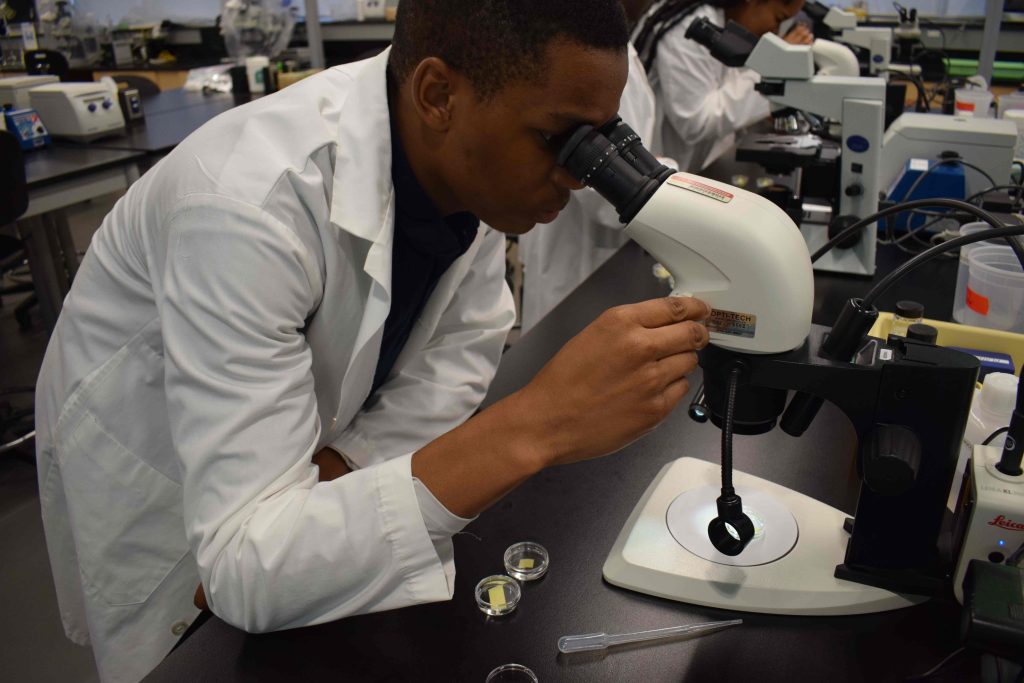
Identification of Sediment Composition Using Electron Microscopes
Students will utilize a scanning electron microscope to analyze the composition of sediments collected from the shore of Old York Lake and compare these samples with typical types of e-waste.
Workshop Leader: Dr. Neil Bennett serves as an Assistant Professor at the University of Toronto. His research focuses on rock-forming processes on Earth and other planetary bodies through high-pressure and high-temperature experimental techniques. Dr. Bennett holds an M.Sc. in Geology from the University of Birmingham (U.K.) and a Ph.D. from the University of Toronto. He completed his postdoctoral fellowship at the Carnegie Institution for Science and subsequently contributed to start-up ventures specializing in science education and the development of autonomous vehicles for scientific data collection. In 2021, he rejoined the University of Toronto as an Assistant Professor.
Statistics Workshop (Grade 10)
- Venue: University of Toronto, St. George Campus
General Overview: This workshop offers an interactive and practical examination of sampling and estimation. Sampling is an essential statistical method that enables informed conclusions about a broader population based on data collected from a representative subset. In various fields — including scientific research, public opinion polling, and environmental analysis — effective sampling techniques are crucial for ensuring that results are both accurate and representative.
Workshop
The workshop begins with icebreakers to allow students to meet the undergraduate and graduate statistics students who will facilitate the activities. Following this, students work in small groups to apply sampling through a geology-themed exercise:
— Each group samples geodes and collaborates to estimate the average rock size from their observations.
— The session then introduces the capture-recapture method, a statistical approach used to estimate population sizes in wildlife studies and related fields.
By the conclusion of the session, students will develop an understanding of how sampling strategies influence data accuracy, potentially leading to a more comprehensive perspective on statistical analysis.
Workshop Leader: Samantha-Jo Caetano is an Assistant Professor in the Teaching Stream for Statistical Sciences at the University of Toronto. She received her undergraduate degree in Mathematics and Statistics from the University of Toronto Mississauga and completed both her Master’s and Ph.D. at McMaster University in Hamilton, focusing on cancer research. Presently, Samantha-Jo instructs a third-year course titled Surveys, Sampling, and Observational Data, in which students conduct survey design and data analysis. One recent project examines survey data relevant to the Canadian Federal Election. Her research includes developments in statistics education, enhancing the communication of statistical concepts, and investigating applications of generative AI in teaching.
Chemistry, Earth Sciences, & Environmental Science Field Trio (Grade 11)
- Field Trip Overview: Explore how geology and urbanization impact water quality in Southern Ontario
Description: STEM students will participate in a field trip that includes visits to three locations. At each site, students will test surface water and bedrock chemistry. The locations are: Old Mill in Etobicoke (an urban area with shale bedrock); Robert Edmondson Conservation Area in Moffat (a non-urban location with limestone bedrock and stagnant water); and Hilton Falls Conservation Area in Milton (a non-urban area with limestone bedrock and rapid water flow). Students will use portable chemical techniques to analyze pH, nutrient levels, salinity, and oxygen concentration at each location. Additionally, instructors will assist students in analyzing local rocks using portable XRF equipment. The findings of these experiments will be used to examine how geology and urban activity influence water chemistry.
Field Trip Leaders: Dan Gregory is an Associate Professor in the Department of Earth Sciences at the University of Toronto. His research involves in-situ analyses of different mineral phases to examine changes in fluid chemistry during mineral formation. These findings have applications in environmental chemistry, economic geology, and paleoceanography.
Jessica D’eon is an Associate Professor in the Department of Chemistry at the University of Toronto. Her work includes providing students with learning opportunities throughout their undergraduate studies, including research projects on fluorinated organics in environmental and biological systems.
Pursue STEM: Student voiceS
Jola A., Cohort 2022 (Grade 12 at the time of writing)
Currently pursing a career in medicine, Wayne State University, Michigan
Reflections on the Pursue STEM program.
March 2021 – June 2024 ~80 hours
— Participated in bi-weekly Saturday research labs in various science fields including Astronomy and Astrophysics, Chemistry, Computer Science, Earth Sciences, Mathematics, Environment studies, Cell Systems and Biology and Statistics.
— Developed scientific interest in cell systems during a session on stem cells and regeneration where we cut up live flatworms and were able to see their ability to regenerate and multiply.
— Displayed active involvement in workshops and activities on topics such as artificial intelligence, black holes, climate change and number theory — as depicted in slides 5 and 7 of the Pursue STEM catalogue.
— Collaborated with a team to create a Capstone research project utilizing inquiry-based learning disciplines to create agent-based modelling information within COBWEB. Demonstrated strong public speaking skills by preparing and delivering the Capstone presentation of research findings to cohort peers, parents, and faculty.
(Edited for privacy)
Helena-Jade, Cohort 2022 (Grade 12),
Currently pursing studies in health Sciences, University of Ottawa
Reflections on Pursue STEM, UofT
“One of the most transformative moments was the Capstone project, where I designed a sophisticated simulation for an at-home health helper. This project not only allowed me to apply complex STEM concepts in a practical setting but also ignited a deep passion for combining technology with healthcare, a field I am now determined to pursue.”
(Edited for privacy)
CBSN Regional Science Fair (All Grades)
- Venue: University of Toronto, St. George Campus
The principal objective of science fairs is to inspire curiosity in Canadian youth through projects in science, technology, engineering, and mathematics (STEM). All LBD students are eligible to compete in the regional science fair, which is presented by the Canadian Black Scientist Network (CBSN).
Annually, LBD students deliver the findings of their scientific research before a panel of judges at the CBSN Ontario Regional Science Fair, hosted by the University of Guelph. Dr. Lawrence Goodridge, President of the Canadian Black Scientist Network and Director of the Canadian Research Institute for Food Safety at the University of Guelph, officiates the event. In 2025, a total of 17 LBD students participated in the Ontario Regional Fair, with one student advancing to present his research at the Canada-Wide Science Fair, held in June 2025 at the University of New Brunswick in Fredericton.
Young, Gifted and Black Future Physics Initiative
- Venue: Dalhousie University, Halifax, Nova Scotia
Each summer, the Imhotep Legacy Academy in Halifax offers a one-week physics workshop titled Young, Gifted and Black Future Physicists (YGBFP). Participants reside at Dalhousie University and engage in a curriculum specifically developed to introduce them to the field of physics and stimulate their interest in STEM disciplines. Imhotep Legacy Academy provides seats in the program to two LBD students — at no charge.
Reflecting on the YGBFP Program, Dalhousie University, Halifax
“Through Pursue STEM, I was introduced to the Future Universal Navigators Summer experience. This took place at Dalhousie University, and I was awarded a full scholarship to attend the duration of the camp through LBD. Participation in this camp introduced me to many professionals, one of whom was a professor of Industrial Engineering. My conversation with him was one of the reasons I decided to apply to and pursue a degree in Industrial (Management) Engineering.”
(Edited for privacy)
Holography — A Science-based Workshop
- Venue: Victoria College, University of Toronto, St. George Campus
Workshop Overview: The holography workshop involves creating a hologram in a darkroom using lasers, holographic film, and development chemicals. The resulting hologram records the three-dimensional image of an object or a small group of objects, maintaining various perspectives. Participants will attend a session at the holography studio to produce the hologram and discuss topics related to optical physics, such as lasers, interference, and diffraction. The workshop provides a visual demonstration of physical principles typically represented mathematically. Students can choose to bring one or more small, bright objects approximately the size of a coffee mug to include in their hologram.
Workshop Leader: Emanuel Istrate earned his Ph.D. in Photonics from the University of Toronto in 2005. He teaches courses focusing on the social aspects of science, holography, and creativity in the sciences. Previously, he developed optics courses and training programs, contributed to lens-less microscopy methods, entrepreneurship initiatives, and industry collaborations.
Workshop: Coding: Python — An introduction
Workshop Leader: Emanuel Istrate earned his Ph.D. in Photonics from the University of Toronto in 2005. He teaches courses focusing on the social aspects of science, holography, and creativity in the sciences. Previously, he developed optics courses and training programs, contributed to lens-less microscopy methods, entrepreneurship initiatives, and industry collaborations.
Workshop Leader: Emanuel Istrate earned his Ph.D. in Photonics from the University of Toronto in 2005. He teaches courses focusing on the social aspects of science, holography, and creativity in the sciences. Previously, he developed optics courses and training programs, contributed to lens-less microscopy methods, entrepreneurship initiatives, and industry collaborations.
Workshop Overview: This workshop comprises ten sessions, each lasting 1.5 hours, and introduces participants to essential concepts and practices in computer programming with the Python programming language. The curriculum is designed to cultivate programming knowledge and problem-solving abilities through active engagement, encouraging learners to integrate their prior experience into reflective, hands-on activities. Additionally, participants will be introduced to modern applications of programming in Data Science and Machine Learning (e.g., ChatGPT) to stimulate interest in these emerging fields.
Workshop Overview: This workshop comprises ten sessions, each lasting 1.5 hours, and introduces participants to essential concepts and practices in computer programming with the Python programming language. The curriculum is designed to cultivate programming knowledge and problem-solving abilities through active engagement, encouraging learners to integrate their prior experience into reflective, hands-on activities. Additionally, participants will be introduced to modern applications of programming in Data Science and Machine Learning (e.g., ChatGPT) to stimulate interest in these emerging fields.
Learning objectives: After completing this course, learners should be able to:
- Demonstrate the process of creation of computer programs
- Create and execute Python scripts
- Apply basic elements of the Python programming language (control, selection and repetition statements, variables of simple data types, input/output, and functions) to solve problems
- Apply strategies to troubleshoot (or debug) Python scripts
- Describe the usage of Python in Data Science and Machine Learning
- Create and execute Python scripts to solve problems in Data Science and Machine Learning
Reflections on the LBD’s Coding Workshop
“Coding Courses — During my time in LBD, I have joined two coding courses that gave me an introduction to the coding languages of C, JavaScript, HTML and Python. Doing these courses gave me a taste of what I may be doing in university as I am interested in going down the path of computer science classes. These courses also helped me get started for my computer science classes in Grade 11 and 12 where we covered mostly the Python language. With the opportunity presented to me, I jumped at it knowing it would benefit me during my time in high school and will continue to benefit myself throughout university.”
(Edited for privacy)